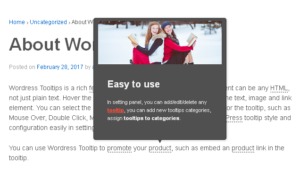
Come aggiungere l’effetto tooltip di WordPress ai nomi degli attributi del prodotto WooCommerce

Ciao, cari utenti del plugin Tooltip di WordPress, spero che questo messaggio vi trovi bene e che stiate trascorrendo un felice fine settimana con i vostri cari Un utente del plugin tooltip di WordPress ha posto una domanda su come aggiungere effetti tooltip ai nomi degli attributi dei prodotti WooCommerce:

Tooltip sugli Nomi degli Attributi dei Prodotti
Ciao, ho creato un tooltip “Entrate”. Vorrei associare il tooltip a un attributo prodotto nel mio negozio chiamato “Entrate”. Tuttavia, nella pagina del prodotto dove le persone possono acquistare, dove mi aspetterei che il tooltip funzioni, non c’è alcun tooltip associato al nome dell’attributo.

Il nostro team di supporto per i plugin di tooltip di WordPress ha risposto:

Ciao,
Spero che tu stia bene e che stai trascorrendo giorni felici con la tua famiglia
Grazie per il messaggio
Siamo felici di aiutarti
Poiché abbiamo molte versioni del plugin con diverse funzioni, potresti fornirci le seguenti informazioni:
1. la versione del plugin che stai utilizzando
2. l’URL relativo al problema, come l’URL del negozio WooCommerce o del prodotto
3. un po’ più di dettagli su come trovare il problema nell’URL o uno screenshot che mostra come hai creato l’attributo prodotto, se è generato da WooCommerce o da un terzo plugin… ecc.
Grazie, ti auguriamo una giornata benedetta con la tua famiglia
Cordiali saluti,

Team di Supporto Tooltip di WordPress
Poi il grande utente ha gentilmente fornito l’URL e lo screenshot per aiutarci a capire il problema. Siamo felici di creare un documento dettagliato per questo fantastico utente e per molti altri utenti dei tooltip di WordPress.

Cosa sono i Tooltip di WordPress

I tooltip sono piccole caselle popup che forniscono informazioni aggiuntive, come video, file audio, immagini, Google Maps, codici QR, wiki, testo e altro. Queste caselle tooltip appaiono quando gli utenti passano il mouse su un elemento delle tue pagine. Questo elemento può essere una parola nel tuo post, una casella di input in un modulo di ricerca, un’immagine, un widget nella tua barra laterale e così via. Il plugin tooltip di WordPress ti consente di aggiungere effetti tooltip a qualsiasi elemento all’interno dei tuoi post di WordPress, così come a oggetti nel menu di WordPress, nei commenti, nei moduli di contatto, nei prodotti WooCommerce, nei forum bbPress, nelle attività BuddyPress e altro, il tutto con effetti attraenti e vari componenti e addon sorprendenti, come lo Schermo a Pallini.

Cosa è WooCommerce

WooCommerce è un potente plugin eCommerce open-source progettato per WordPress. Consente agli utenti di creare e gestire facilmente i propri negozi online, offrendo una piattaforma flessibile e personalizzabile per vendere prodotti fisici e digitali. Di seguito sono riportate alcune caratteristiche e vantaggi chiave dell’uso di WooCommerce:
– Interfaccia amichevole: WooCommerce è progettato con la semplicità in mente. La sua interfaccia intuitiva rende facile per i principianti e gli utenti esperti impostare e gestire i propri negozi online senza una conoscenza tecnica approfondita.
– Personalizzabile: Con una vasta gamma di temi ed estensioni disponibili, WooCommerce consente agli utenti di personalizzare l’aspetto e la funzionalità dei propri negozi online per adattarsi all’identità del loro marchio e alle specifiche esigenze aziendali.
– Gestione dei Prodotti: Gli utenti possono facilmente aggiungere, modificare e organizzare i prodotti, inclusa la definizione dei prezzi, la gestione dell’inventario e l’offerta di variazioni di prodotti come taglie e colori.
– Opzioni di Pagamento: WooCommerce supporta vari gateway di pagamento, comprese le carte di credito, PayPal e Stripe, consentendo alle aziende di scegliere i metodi di pagamento che meglio si adattano ai loro clienti.
– Comunità e Supporto: Essendo una piattaforma popolare, WooCommerce ha una grande comunità di utenti e sviluppatori, che forniscono ampia documentazione, forum e risorse di supporto.
In generale, WooCommerce è una soluzione ideale per chiunque desideri avviare un negozio online, sia che tu stia gestendo una piccola impresa o un’azienda più grande. Combina la potenza di WordPress con la funzionalità eCommerce, rendendola una scelta preferita per i rivenditori online.

Cosa sono gli Attributi dei Prodotti di WooCommerce?

Gli Attributi dei Prodotti di WooCommerce sono caratteristiche essenziali che consentono ai proprietari dei negozi di definire specifiche caratteristiche dei loro prodotti. Gli attributi aiutano a migliorare le variazioni dei prodotti, migliorando le opzioni di filtro e fornendo informazioni dettagliate ai clienti, portando a una migliore esperienza di acquisto. Ecco uno sguardo più da vicino a cosa sono gli attributi dei prodotti e come possono essere utilizzati:

Caratteristiche principali degli Attributi dei Prodotti di WooCommerce:

– Attributi Personalizzabili: Puoi creare attributi personalizzati che si adattano ai tuoi prodotti. Ad esempio, gli attributi comuni includono taglia, colore, materiale, peso e dimensioni.
– Prodotti Variabili: Gli attributi svolgono un ruolo fondamentale nella creazione di prodotti variabili. Ad esempio, se vendi una t-shirt disponibile in diverse taglie e colori, ogni combinazione può essere impostata come una variazione unica basata sugli attributi definiti.
– Filtraggio dei Prodotti: Gli attributi possono essere utilizzati per il filtraggio dei prodotti nella parte anteriore del tuo negozio. I clienti possono affinare le loro ricerche in base a caratteristiche specifiche, facilitando la ricerca di ciò che desiderano.
– Vantaggi SEO: Gli attributi configurati correttamente possono migliorare il SEO fornendo parole chiave e dettagli aggiuntivi relativi ai prodotti, il che può migliorare la visibilità nei motori di ricerca.
– Esperienza Utente Migliorata: Mostrando chiaramente gli attributi, i clienti possono prendere decisioni di acquisto informate in quanto possono facilmente confrontare i prodotti in base alle loro caratteristiche.

Come Aggiungere gli Attributi dei Prodotti in WooCommerce:

1. Accesso alla Sezione Attributi:
– Vai alla tua dashboard di WordPress, naviga su Prodotti > Attributi.

2. Creazione di Nuovi Attributi:
– Inserisci il nome dell’attributo (ad esempio, Colore).
– Configura lo slug (versione ottimizzata per URL) e scegli se abilitarlo per le variazioni.
– Clicca su Aggiungi Attributo.

3. Assegnazione degli Attributi ai Prodotti:
– Quando aggiungi o modifichi un prodotto, troverai una scheda Attributi.
– Seleziona l’attributo che hai creato e configura i suoi valori (ad esempio, Rosso, Blu, Verde).
– Salva le modifiche per applicare gli attributi al prodotto.

In generale, gli Attributi dei Prodotti di WooCommerce sono un potente modo per migliorare i dettagli dei prodotti e l’esperienza del cliente nel tuo negozio online. Utilizzare efficacemente gli attributi può aiutare a differenziare i tuoi prodotti, semplificare il processo di acquisto e migliorare le vendite complessive!

Come Aggiungere l’Effetto Tooltip di WordPress ai Nomi degli Attributi dei Prodotti WooCommerce?

Aggiungere tooltip agli attributi dei prodotti di WooCommerce è un processo semplice. Ecco come farlo rapidamente ed efficientemente:

1. Scarica il Plugin: Prima, visita il sito web del plugin Tooltip di WooCommerce per scaricare il plugin WordPress Tooltip Pro Plus.

2. Carica il Plugin: Accedi alla tua dashboard di WordPress. Naviga nella sezione plugin, carica il plugin Tooltip di WooCommerce e poi attivalo.

3. Accedi alle Impostazioni degli Addon: Nella barra laterale sinistra, trova l’elemento di menu “Tooltip” e cliccaci sopra.

tooltip sub menu items

4. Abilita il Tooltip del Prodotto WooCommerce: Nella sezione “Impostazioni degli Addon Tooltip”, vedrai una selezione di 18 diversi addon tooltip di WordPress. Trova l’addon “Tooltip per Prodotto WooCommerce”, abilitato e clicca sul pulsante “Aggiorna Ora”.

tooltip addons in tooltip multisite license version
5. Torna al Menu Tooltip: Clicca di nuovo sul menu “Tooltip” o semplicemente ricarica la pagina corrente.

6. Seleziona Woo Tooltips: Scegli l’elemento di sottomenu “Woo Tooltips”, che ti porterà alle impostazioni pertinenti.

7. Regola le Impostazioni Avanzate: Ora vedrai il pannello delle “Impostazioni degli Addon Tooltip Avanzati WooCommerce”. Qui, assicurati di abilitare l’opzione “Tooltip per Attributo Prodotto WooCommerce”, insieme a tutte le altre sette impostazioni tooltip di WooCommerce.

advanced woocommerce tooltips addon settings
8. Visualizza i Tooltip sugli Attributi dei Prodotti: Una volta configurato, dovresti vedere i tooltip funzionare correttamente sulle etichette degli attributi dei tuoi prodotti WooCommerce.
Nota Importante: Prima che i tooltip vengano visualizzati correttamente, è essenziale creare alcuni termini tooltip. Se sei nuovo nell’uso dei tooltip di WooCommerce, ti consigliamo di controllare i nostri video tutorial su come creare e personalizzare facilmente i termini tooltip. Puoi migliorare l’aspetto di ogni tooltip per catturare meglio l’attenzione dei clienti.

tooltips for woocommerce product additional information

Inoltre, i tooltip di WooCommerce possono essere applicati anche alle descrizioni dei prodotti e alle descrizioni brevi. Puoi utilizzare shortcode per includere contenuti tooltip avanzati direttamente all’interno delle descrizioni dei prodotti WooCommerce. Inoltre, creare un glossario per i tuoi prodotti può aiutare i clienti a comprendere i vantaggi e le caratteristiche di ciò che offri. Infine, vale la pena notare che puoi mostrare il titolo del prodotto WooCommerce, l’immagine, il prezzo e i pulsanti di azione come “Aggiungi al Carrello” e “Visualizza Carrello” all’interno dei tooltip, rendendo possibile mostrare queste informazioni in qualsiasi post di WordPress attraverso la funzionalità di carrello prodotto WooCommerce in qualsiasi luogo.


Tagged with: , , , ,

Comment ajouter un effet de info-bulle WordPress aux noms des attributs de produit WooCommerce

Bonjour, chers utilisateurs du plugin WordPress Tooltip, J’espère que ce message vous trouve en bonne santé et que vous passez un agréable week-end avec vos proches. Un utilisateur du plugin Tooltip de WordPress a posé une question concernant l’ajout d’effets de tooltip aux noms des attributs de produit WooCommerce:

Tooltips sur les noms des attributs de produit
Salut, j’ai créé un tooltip “Revenu”. J’aimerais associer le tooltip à un attribut de produit dans ma boutique appelé “Revenu”. Cependant, sur la page produit où les gens peuvent acheter, je ne vois pas de tooltip attaché au nom de l’attribut.

Réponse de notre équipe de support du plugin WordPress Tooltips

Salut,
J’espère que vous allez bien et que vous passez de bons moments en famille.
Merci pour votre message !
Nous sommes très heureux de pouvoir vous aider.
Étant donné que nous avons plusieurs versions du plugin avec différentes fonctions, pourriez-vous nous fournir les informations suivantes :
1. La version du plugin que vous utilisez
2. L’URL liée au problème, comme l’URL de la boutique WooCommerce ou l’URL du produit
3. Un peu plus de détails sur la façon de trouver le problème dans l’URL, ou une capture d’écran montrant comment vous avez créé l’attribut de produit, s’il est généré par WooCommerce ou par un troisième plugin, etc.
Merci, passez une journée bénie avec votre famille.
Bien cordialement,
Équipe de support des Tooltips WordPress

Ensuite, l’excellent utilisateur a gentiment fourni l’URL et la capture d’écran pour nous aider à comprendre le problème. Nous sommes ravis de créer un document détaillé pour cet utilisateur incroyable et pour d’autres utilisateurs de tooltips WordPress.

Qu’est-ce que les Tooltips WordPress ?

Les tooltips sont de petites boîtes contextuelles qui fournissent des informations supplémentaires, telles que des vidéos, des fichiers audio, des images, des cartes Google, des codes QR, des wikis, du texte, et plus encore. Ces boîtes tooltip apparaissent lorsque les utilisateurs survolent un élément de vos pages. Cet élément peut être un mot de votre article, une case d’entrée dans un formulaire de recherche, une image, un widget dans votre barre latérale, etc. Le plugin Tooltip WordPress vous permet d’ajouter des effets de tooltip à tout élément de vos articles WordPress, ainsi qu’aux éléments du menu WordPress, aux commentaires, aux formulaires de contact, aux produits WooCommerce, aux forums bbPress, aux activités BuddyPress, et bien plus avec des effets attrayants et divers composants et add-ons incroyables, tels que Bullets Screen.

Qu’est-ce que WooCommerce ?

WooCommerce est un puissant plugin eCommerce open source conçu pour WordPress. Il permet aux utilisateurs de créer et de gérer facilement leurs propres boutiques en ligne, offrant une plateforme flexible et personnalisable pour vendre des produits physiques et numériques. Voici quelques fonctionnalités et avantages clés de l’utilisation de WooCommerce :

– **Interface conviviale** : WooCommerce est conçu pour la simplicité. Son interface intuitive facilite la configuration et la gestion des boutiques en ligne, même pour les débutants.

– **Personnalisable** : Avec un large éventail de thèmes et d’extensions disponibles, WooCommerce permet aux utilisateurs de personnaliser l’apparence et la fonctionnalité de leurs boutiques en ligne pour correspondre à l’identité de leur marque.

– **Gestion des produits** : Les utilisateurs peuvent facilement ajouter, modifier et organiser des produits, y compris définir des prix, gérer l’inventaire et offrir des variations de produits comme des tailles et des couleurs.

– **Options de paiement** : WooCommerce prend en charge divers passerelles de paiement, notamment les cartes de crédit, PayPal et Stripe.

– **Communauté et support** : Étant une plateforme populaire, WooCommerce possède une large communauté d’utilisateurs et de développeurs, offrant une documentation, des forums et des ressources de support étendues.

En résumé, WooCommerce est une solution idéale pour quiconque souhaitant créer une boutique en ligne, que vous dirigiez une petite entreprise ou une grande entreprise. Il combine la puissance de WordPress avec des fonctionnalités eCommerce, en faisant un choix privilégié pour les détaillants en ligne.

Qu’est-ce qu’un attribut de produit WooCommerce ?

Les attributs de produit WooCommerce sont des caractéristiques essentielles qui permettent aux propriétaires de boutiques de définir des caractéristiques spécifiques de leurs produits. Les attributs aident à améliorer les variations de produit, à optimiser les options de filtrage et à fournir des informations détaillées aux clients, ce qui conduit à une meilleure expérience d’achat.

Caractéristiques clés des attributs de produit WooCommerce :
– **Attributs personnalisables** : Vous pouvez créer des attributs personnalisés adaptés à vos produits, comme la taille, la couleur, le matériau, le poids, et les dimensions.

– **Produits variables** : Les attributs jouent un rôle crucial dans l’établissement de produits variables. Par exemple, si vous vendez un t-shirt disponible en différentes tailles et couleurs, chaque combinaison peut être définie comme une variation unique en fonction des attributs définis.

– **Filtrage des produits** : Les attributs peuvent être utilisés pour filtrer les produits sur le front-end de votre boutique, permettant aux clients de préciser leur recherche en fonction de caractéristiques spécifiques.

– **Avantages SEO** : Des attributs correctement configurés peuvent améliorer le SEO en fournissant des mots-clés supplémentaires et des détails relatifs aux produits, ce qui peut augmenter la visibilité dans les recherches.

– **Expérience utilisateur améliorée** : En affichant clairement les attributs, les clients peuvent prendre des décisions d’achat éclairées en comparant facilement les produits selon leurs caractéristiques.

Comment ajouter des attributs de produit dans WooCommerce :

1. **Accéder à la section des attributs** :
– Allez dans votre tableau de bord WordPress, puis naviguez vers Produits > Attributs.

2. **Créer de nouveaux attributs** :
– Entrez le nom de l’attribut (ex. : Couleur).
– Configurez le slug (version adaptée aux URL) et choisissez si vous souhaitez qu’il soit activé pour les variations.
– Cliquez sur Ajouter un attribut.

3. **Attribuer des attributs aux produits** :
– Lors de l’ajout ou de la modification d’un produit, vous trouverez un onglet Attributs.
– Sélectionnez l’attribut que vous avez créé et configurez ses valeurs (ex. : Rouge, Bleu, Vert).
– Enregistrez les modifications pour appliquer les attributs au produit.

En résumé, les attributs de produit WooCommerce sont un moyen puissant d’améliorer les détails des produits et l’expérience client dans votre boutique en ligne. Utiliser efficacement les attributs peut aider à différencier vos produits, à rationaliser le processus d’achat, et à améliorer les ventes globales !

Comment ajouter des effets de WordPress Tooltips aux noms des attributs de produit WooCommerce ?

Ajouter des tooltips aux attributs de produit WooCommerce est un processus simple. Voici comment procéder rapidement et efficacement :
1. **Télécharger le plugin** : Tout d’abord, visitez le site Web du plugin WooCommerce Tooltip pour télécharger le plugin WordPress Tooltip Pro Plus.

2. **Uploader le plugin** : Connectez-vous à votre tableau de bord WordPress. Accédez à la section plugins, téléchargez le plugin WooCommerce Tooltip, puis activez-le.

3. **Accéder aux paramètres des addons** : Sur la barre latérale gauche, trouvez l’élément de menu “Tooltips” et cliquez dessus.

tooltip sub menu items

4. **Activer les tooltips WooCommerce** : Dans le panneau de paramètres des addons, vous verrez une sélection de 18 différents addons de tooltip WordPress. Trouvez l’addon “Tooltips pour produits WooCommerce”, activez-le et cliquez sur le bouton “Mettre à jour maintenant”.

tooltip addons in tooltip multisite license version

5. **Retourner au menu des Tooltips** : Revenez au menu “Tooltips” ou simplement rafraîchissez la page actuelle.

6. **Sélectionner les Tooltips Woo** : Choisissez l’élément de sous-menu “Woo Tooltips”, ce qui vous amènera aux paramètres pertinents.

7. **Ajuster les paramètres avancés** : Vous verrez maintenant le panneau de paramètres du plugin WooCommerce Tooltips. Assurez-vous d’activer l’option “Tooltips pour attributs de produit WooCommerce”, ainsi que tous les autres sept paramètres de tooltip WooCommerce.

advanced woocommerce tooltips addon settings
8. **Visionner les Tooltips sur les attributs de produit** : Une fois configuré, vous devriez voir les tooltips fonctionner correctement sur les étiquettes d’attributs de produit WooCommerce.

tooltips for woocommerce product additional information

Note importante:
Avant que les tooltips ne s’affichent correctement, il est essentiel de créer certains termes de tooltip. Si vous êtes nouveau dans l’utilisation des tooltips WooCommerce, nous vous recommandons de consulter nos tutoriels vidéo sur la façon de créer et de personnaliser facilement des termes de tooltip. Vous pouvez améliorer l’apparence de chaque tooltip pour capturer plus efficacement l’attention des clients.

woocommerce attribute tooltip

De plus, les tooltips WooCommerce peuvent également s’appliquer aux descriptions de produits et aux courtes descriptions. Vous pouvez utiliser des shortcodes de tooltip pour inclure du contenu tooltip avancé directement dans les descriptions de produits WooCommerce. Enfin, il convient de noter que vous pouvez mettre en avant le titre du produit WooCommerce, l’image, le prix et les boutons d’action comme “Ajouter au panier” et “Voir le panier” dans des tooltips, ce qui permet d’afficher cette information dans n’importe quel article WordPress grâce à la fonctionnalité de panier de produit WooCommerce.

Tagged with: , , , ,

Wie man den WordPress Tooltip Effekt in WordPress zu WooCommerce-Produktattributnamen hinzufügt

Hallo, liebe WordPress Tooltip Plugin Nutzer, ich hoffe, diese Nachricht trifft Sie wohl und Sie haben ein schönes Wochenende mit Ihren Liebsten Ein Nutzer des WordPress Tooltip-Plugins stellte eine Frage, wie man Tooltip-Effekte an den Produktattributnamen von WooCommerce hinzufügen kann:

Tooltips für Produktattributnamen
Hallo, ich habe einen Tooltip “Einkommen” erstellt. Ich möchte den Tooltip mit einem Produktattribut in meinem Shop verbinden, das “Einkommen” heißt. Allerdings gibt es auf der Produktseite, wo die Leute kaufen können und wo ich erwarten würde, dass der Tooltip funktioniert, keinen Tooltip, der mit dem Attributnamen verbunden ist.

Unser Support-Team des WordPress Tooltip-Plugins antwortete:

Hallo,
ich hoffe, es geht Ihnen gut und Sie haben schöne Tage mit Ihrer Familie
Danke für die Nachricht
Wir freuen uns, Ihnen helfen zu können
Da wir viele Plugin-Versionen mit unterschiedlichen Funktionen haben, könnten Sie uns bitte folgende Informationen mitteilen:
1. die Version des Plugins, das Sie verwenden
2. die URL, die mit dem Problem zusammenhängt, wie die WooCommerce-Store- oder Produkt-URL
3. ein paar Details dazu, wie man das Problem in der URL finden kann, oder einen Screenshot, der zeigt, wie Sie das Produktattribut erstellt haben – wurde es von WooCommerce oder einem Drittanbieter-Plugin generiert?… usw.
Danke, ich wünsche Ihnen einen gesegneten Tag mit Ihrer Familie
Mit besten Grüßen,
WordPress Tooltips Support-Team

Dann stellte der großartige Nutzer freundlicherweise die URL und einen Screenshot zur Verfügung, um uns zu helfen, das Problem zu verstehen. Wir freuen uns, ein detailliertes Dokument für diesen großartigen Nutzer und für weitere WordPress Tooltip-Nutzer zu erstellen.

Was sind WordPress Tooltips?

Tooltips sind kleine Popup-Fenster, die zusätzliche Informationen bereitstellen, wie Videos, Audio-Dateien, Bilder, Google Maps, QR-Codes, Wikis, Text usw. Diese Tooltip-Fenster erscheinen, wenn Benutzer mit der Maus über ein Element auf Ihren Seiten fahren. Dieses Element kann ein Wort in Ihrem Beitrag, ein Eingabefeld in einem Suchformular, ein Bild, ein Widget in Ihrer Seitenleiste usw. sein. Das WordPress Tooltip-Plugin ermöglicht es Ihnen, Tooltip-Effekte auf jedes Element innerhalb Ihrer WordPress-Beiträge sowie auf Elemente im WordPress-Menü, Kommentare, Kontaktformulare, WooCommerce-Produkte, bbPress-Foren, BuddyPress-Aktivitäten und vieles mehr hinzuzufügen, alles mit attraktiven Effekten und verschiedenen erstaunlichen Komponenten und Add-Ons, wie dem Bullet Screen.

Was ist WooCommerce?

WooCommerce ist ein leistungsstarkes, Open-Source E-Commerce-Plugin, das für WordPress entwickelt wurde. Es ermöglicht Benutzern, ihre eigenen Online-Shops einfach zu erstellen und zu verwalten, und bietet eine flexible und anpassbare Plattform zum Verkauf von physischen und digitalen Produkten. Hier sind einige wichtige Funktionen und Vorteile von WooCommerce:

– Benutzerfreundliche Schnittstelle: WooCommerce ist mit Blick auf Einfachheit konzipiert. Seine intuitive Benutzeroberfläche ermöglicht es sowohl Anfängern als auch erfahrenen Nutzern, ihre Online-Shops ohne umfangreiche technische Kenntnisse einzurichten und zu verwalten.

– Anpassbar: Mit einer Vielzahl von verfügbaren Themen und Erweiterungen erlaubt WooCommerce den Benutzern, das Aussehen und die Funktionalität ihrer Online-Shops anzupassen, um der Markenidentität und den spezifischen Geschäftsbedürfnissen gerecht zu werden.

– Produktmanagement: Benutzer können Produkte einfach hinzufügen, bearbeiten und organisieren, einschließlich der Festlegung von Preisen, der Verwaltung von Beständen und dem Angebot von Produktvariationen wie Größen und Farben.

– Zahlungsoptionen: WooCommerce unterstützt verschiedene Zahlungs-Gateways, darunter Kreditkarten, PayPal und Stripe, damit Unternehmen die Zahlungsmethoden wählen können, die am besten zu ihren Kunden passen.

– Gemeinschaft und Unterstützung: Als beliebte Plattform hat WooCommerce eine große Gemeinschaft von Benutzern und Entwicklern, die umfangreiche Dokumentationen, Foren und Unterstützungsressourcen anbieten.

Insgesamt ist WooCommerce eine ideale Lösung für jeden, der einen Online-Shop starten möchte, unabhängig davon, ob Sie ein kleines Unternehmen oder ein größeres Unternehmen betreiben. Es vereint die Leistungsfähigkeit von WordPress mit E-Commerce-Funktionalitäten und macht es zur ersten Wahl für Online-Händler.

Was sind WooCommerce Produktattribute?

WooCommerce Produktattribute sind wesentliche Merkmale, die es Shop-Besitzern ermöglichen, spezifische Eigenschaften ihrer Produkte zu definieren. Attribute tragen dazu bei, Produktvariationen zu verbessern, Filteroptionen zu erweitern und den Kunden detaillierte Informationen bereitzustellen, was letztendlich zu einem besseren Einkaufserlebnis führt. Hier ist ein genauerer Blick darauf, was Produktattribute sind und wie sie genutzt werden können:

Wichtige Merkmale der WooCommerce Produktattribute:

– Anpassbare Attribute: Sie können benutzerdefinierte Attribute erstellen, die Ihren Produkten entsprechen. Beispielsweise gehören häufige Attribute zu Größen, Farben, Materialien, Gewicht und Abmessungen.

– Variable Produkte: Attribute spielen eine wichtige Rolle bei der Einrichtung variabler Produkte. Wenn Sie beispielsweise ein T-Shirt in verschiedenen Größen und Farben verkaufen, kann jede Kombination als einzigartige Variation basierend auf den definierten Attributen festgelegt werden.

– Produktfilterung: Attribute können zur Produktfilterung auf der Frontend-Seite Ihres Shops verwendet werden. Kunden können ihre Suche anhand spezifischer Merkmale verfeinern, was es einfacher macht, das Gewünschte zu finden.

– SEO-Vorteile: Richtig konfigurierte Attribute können die SEO verbessern, indem sie zusätzliche Keywords und Details zu Produkten bereitstellen, die die Sichtbarkeit in Suchmaschinen erhöhen können.

– Verbesserte Benutzererfahrung: Durch die klare Anzeige der Attribute können Kunden informierte Kaufentscheidungen treffen, da sie Produkte leicht anhand ihrer Eigenschaften vergleichen können.

So fügen Sie Produktattribute in WooCommerce hinzu:

1. Zugriff auf den Abschnitt Attribute:
Gehen Sie zu Ihrem WordPress-Dashboard, navigieren Sie zu Produkte > Attribute.

2. Neue Attribute erstellen:
Geben Sie den Namen des Attributs ein (z. B. Farbe).
Konfigurieren Sie den Slug (URL-freundliche Version) und wählen Sie aus, ob es für Variationen aktiviert werden soll.
Klicken Sie auf “Attribute hinzufügen”.

3. Attribute Produkten zuweisen:
Beim Hinzufügen oder Bearbeiten eines Produkts finden Sie einen Reiter „Attribute“.
Wählen Sie das von Ihnen erstellte Attribut aus und konfigurieren Sie dessen Werte (z. B. Rot, Blau, Grün).
Speichern Sie die Änderungen, um die Attribute auf das Produkt anzuwenden.
Insgesamt sind WooCommerce Produktattribute eine leistungsstarke Möglichkeit, die Produktdetails und das Kundenerlebnis in Ihrem Online-Shop zu verbessern. Durch die effektive Nutzung von Attributen können Sie Ihre Produkte unterscheiden, den Einkaufsprozess optimieren und den Umsatz insgesamt steigern!

So fügen Sie WordPress Tooltip-Effekte zu WooCommerce Produktattributnamen hinzu:

Das Hinzufügen von Tooltips zu WooCommerce Produktattributen ist ein unkomplizierter Prozess. Hier ist, wie Sie es schnell und effizient tun:

1. Plugin herunterladen: Zuerst besuchen Sie die Website des WooCommerce Tooltip-Plugins, um das WordPress Tooltip Pro Plus-Plugin herunterzuladen.

2. Plugin hochladen: Melden Sie sich in Ihrem WordPress-Dashboard an. Navigieren Sie zum Plugin-Bereich, laden Sie das WooCommerce Tooltip-Plugin hoch und aktivieren Sie es anschließend.

3. Addon-Einstellungen aufrufen: Finden Sie im linken Seitenmenü den Punkt „Tooltips“ und klicken Sie darauf.

tooltip sub menu items

4. WooCommerce Produkt-Tooltip aktivieren: Im Panel der „Tooltips Addon-Einstellungen“ sehen Sie eine Auswahl von 18 verschiedenen WordPress Tooltip-Addons. Finden Sie das Addon „Tooltips für WooCommerce Produkt“, aktivieren Sie es und klicken Sie auf die Schaltfläche „Jetzt aktualisieren“.

tooltip addons in tooltip multisite license version
5. Zum Tooltips-Menü zurückkehren: Klicken Sie erneut auf das Menü „Tooltips“ oder aktualisieren Sie einfach die aktuelle Seite.

6. Woo Tooltips auswählen: Wählen Sie den Unterpunkt „Woo Tooltips“, um zu den relevanten Einstellungen zu gelangen.

7. Erweiterte Einstellungen anpassen: Sie sehen nun das Panel für die „Erweiterte WooCommerce Tooltips Addon-Einstellungen“. Stellen Sie sicher, dass die Option „Tooltips für WooCommerce Produktattribut“ sowie alle anderen sieben WooCommerce Tooltip-Einstellungen aktiviert sind.

8. Tooltips für Produktattribute anzeigen: Nach der Einrichtung sollten Sie sehen, dass Tooltips korrekt bei den Produktattributetiketten von WooCommerce funktionieren.

advanced woocommerce tooltips addon settings


tooltips for woocommerce product additional information

Wichtiger Hinweis: Bevor die Tooltips korrekt angezeigt werden, ist es wichtig, einige Tooltip-Begriffe zu erstellen. Wenn Sie neu in der Verwendung von WooCommerce Tooltips sind, empfehlen wir, unsere Video-Tutorials zu überprüfen, wie Sie Tooltip-Begriffe einfach erstellen und anpassen können. Sie können das Erscheinungsbild jedes Tooltips verbessern, um die Aufmerksamkeit der Kunden effektiver zu gewinnen.

Zusätzlich können WooCommerce Tooltips auch für Produktbeschreibungen und Kurzbeschreibungen verwendet werden. Sie können Tooltip-Shortcodes nutzen, um erweiterte Tooltip-Inhalte direkt in WooCommerce-Produktbeschreibungen einzufügen. Darüber hinaus kann das Erstellen eines Glossars für Ihre Produkte den Kunden helfen, die Vorteile und Funktionen Ihres Angebots zu verstehen. Schließlich ist es erwähnenswert, dass Sie den WooCommerce-Produkt-Titel, das Bild, den Preis und Aktionsknöpfe wie „In den Warenkorb“ und „Warenkorb anzeigen“ in Tooltips erhalten können, was es möglich macht, diese Informationen in jedem WordPress-Beitrag über die Funktionalität „WooCommerce Produktkasse überall“ anzuzeigen.

Tagged with: , , , ,

How to Add WordPress Tooltips Effect to WooCommerce Product Attribute Names

Hello, dear  WordPress Tooltip plugin users , I hope this message finds you are doing well and having   happy weekend with your loved ones 🙂  A wordpress tooltip plugin user asked a question about how to add tooltips effect on woocommerce product attribute names:

Tooltips on Product Attribute Names

Hello I have created a tooltip “Income”. I would like to associate the tooltip with a Product Attribute in my Store called “Income”. However, on the product page where people can purchase, where I would expect the tooltip to work, there is not tooltip attached to the attribute name.

Our wordpress tooltips plugin support team replied:

Hi,

Hope you are doing well and having happy days with your family 🙂

Thanks for the message 🙂

We are very happy to help you 🙂

Since we have many plugin versions with different functions, could you please tell us with the following information:
1 the plugin version you are using
2 the URL related with the problem , such us the woocommerce store or product URL
3 a little more details on how to find the problem in the URL, or a screenshot showing how you created the Product Attribute, is it generated by woocommerce or a 3rd plugin…etc 🙂

Thanks, have a blessed day with your family 🙂

Best Regards,
Wordpress Tooltips Support Team

Then the great user kindly provided the URL and screenshot to help us understand the problem. We are happy to create a detailed document for this amazing user and for more WordPress tooltip users. 🙂

What is WordPress Tooltips

Tooltips are small popup boxes that provide additional information, such as videos, audio files, images, Google Maps, QR codes, wikis, text, and more. These tooltip boxes appear when users hover over an element on your pages. This element can be a word in your post, an input box in a search form, an image, a widget in your sidebar, and so forth. The WordPress tooltip plugin enables you to add tooltip effects to any element within your WordPress posts, as well as to items in the WordPress menu, comments, contact forms, WooCommerce products, bbPress forums, BuddyPress activities, and more, all with attractive effects and various amazing components and add-ons, such as Bullets Screen.

What is WooCommerce

WooCommerce is a powerful, open-source eCommerce plugin designed for WordPress. It enables users to create and manage their own online stores easily, providing a flexible and customizable platform to sell physical and digital products. Below are some key features and benefits of using WooCommerce:

  • User-Friendly Interface: WooCommerce is designed with simplicity in mind. Its intuitive interface makes it easy for both beginners and experienced users to set up and manage their online stores without extensive technical knowledge.
  • Customizable: With a wide range of themes and extensions available, WooCommerce allows users to customize the look and functionality of their online stores to match their brand’s identity and specific business needs.
  • Product Management: Users can easily add, edit, and organize products, including setting prices, managing inventory, and offering variations of products like sizes and colors.
  • Payment Options: WooCommerce supports various payment gateways, including credit cards, PayPal, and Stripe, allowing businesses to choose the payment methods that best suit their customers.
  • ommunity and Support: Being a popular platform, WooCommerce has a large community of users and developers, providing extensive documentation, forums, and support resources.

Overall, WooCommerce is an ideal solution for anyone looking to start an online store, whether you are running a small business or a larger enterprise. It combines the power of WordPress with eCommerce functionality, making it a top choice for online retailers.

What is WooCommerce Product Attribute?

WooCommerce Product Attributes are essential features that allow store owners to define specific characteristics of their products. Attributes help in enhancing product variations, improving filtering options, and providing detailed information to customers, ultimately leading to a better shopping experience. Here’s a closer look at what product attributes are and how they can be utilized:

Key Features of WooCommerce Product Attributes:

Customizable Attributes: You can create custom attributes that suit your products. For example, common attributes include size, color, material, weight, and dimensions.

Variable Products: Attributes play a vital role in setting up variable products. For instance, if you sell a t-shirt available in different sizes and colors, each combination can be set as a unique variation based on the defined attributes.

Product Filtering: Attributes can be used for product filtering on your store’s front end. Customers can refine their search based on specific characteristics, making it easier to find what they are looking for.

SEO Benefits: Properly configured attributes can enhance SEO by providing additional keywords and details related to products, which can improve search visibility.

Enhanced User Experience: By clearly displaying attributes, customers can make informed purchasing decisions as they can easily compare products based on their characteristics.

How to Add Product Attributes in WooCommerce:

1. Accessing the Attributes Section:

Go to your WordPress dashboard, navigate to Products > Attributes.

2. Creating New Attributes:

Enter the name of the attribute (e.g., Color).

Configure the slug (URL-friendly version) and choose whether to enable it for variations.

Click Add Attribute.

3. Assigning Attributes to Products:

When adding or editing a product, you will find an Attributes tab.

Select the attribute you created and configure its values (e.g., Red, Blue, Green).

Save the changes to apply the attributes to the product.

Overall,WooCommerce Product Attributes are a powerful way to enhance product details and customer experience on your online store. Utilizing attributes effectively can help differentiate your products, streamline the shopping process, and improve overall sales!

How to Add WordPress Tooltips Effect to WooCommerce Product Attribute Names?

Adding tooltips to WooCommerce product attributes is a straightforward process. Here’s how to do it quickly and efficiently:

  1. Download the Plugin: First, visit the WooCommerce Tooltip plugin website to download the WordPress Tooltip Pro Plus plugin.
  2. Upload the Plugin: Log in to your WordPress dashboard. Navigate to the plugins section, upload the WooCommerce Tooltip plugin, and then activate it.
  3. Access Addon Settings: On the left sidebar, find the “Tooltips” menu item and click on it.

    tooltip sub menu items

    tooltip sub menu items

  4. Then, select the “Addons” submenu to access the “Tooltips Addon Settings” panel.tooltip addons in tooltip multisite license version
  5. Enable WooCommerce Product Tooltip: In the “Tooltips Addon Settings” panel, you’ll see a selection of 18 different WordPress tooltip addons. Find the “Tooltips for WooCommerce Product” addon, enable it, and click the “Update Now” button.
  6. Return to the Tooltips Menu: Click on the “Tooltips” menu again.  Or Simply refresh the current page.
  7. Select Woo Tooltips:  Choose the “Woo Tooltips” submenu item, which will bring you to the relevant settings.
  8. Adjust Advanced Settings: You’ll now see the “Advanced WooCommerce Tooltips Addon Settings” panel. Here, make sure to enable the “Tooltips for WooCommerce Product Attribute” option, along with all other seven WooCommerce tooltip settings.advanced woocommerce tooltips addon settings
  9. View Tooltips on Product Attributes: Once set up, you should see tooltips functioning correctly on your WooCommerce product attribute labels.

tooltips for woocommerce product additional information

Important Note: Before tooltips will display correctly, it’s essential to create some tooltip terms. If you’re new to using WooCommerce tooltips, we recommend checking out our video tutorials on how to create and customize tooltip terms easily. You can enhance each tooltip’s appearance to capture customer attention more effectively.

woocommerce attribute tooltip

Additionally, WooCommerce tooltips can also apply to product descriptions and short descriptions. You can utilize tooltip shortcodes to include advanced tooltip content directly within WooCommerce product descriptions. Furthermore, creating a glossary for your products can help customers understand the benefits and features of what you offer. Lastly, it’s worth noting that you can showcase the WooCommerce product title, image, price, and action buttons like “Add to Cart” and “View Cart” within tooltips, making it possible to display this information in any WordPress post through the WooCommerce product cart anywhere functionality.


Tagged with: , , , ,

Як створити та редагувати красиві підказки за допомогою редактора Gutenberg в WordPress за 3 хвилини

Привіт, шановні користувачі плагіна WordPress Tooltip! Сподіваюся, це повідомлення застане вас у доброму здоров’ї і ви маєте щасливий день разом із родиною   “Ми отримали пропозицію від користувача плагіна WordPress Tooltips -> ‘Було б абсолютно чудово, якби ваш плагін Tooltip дозволяв користувачам створювати підказки безпосередньо в інтерфейсі Gutenberg,’ сказала вона:

Яскрава ідея для створення підказок у Gutenberg!
Шановні розробники плагіна Tooltip,
Сподіваюся, це повідомлення застане вас у доброму гуморі! Як відданий користувач як WordPress, так і потужного редактора Gutenberg, я хотів би поділитися маленькою пропозицією, яка, на мою думку, може зробити чудову різницю для багатьох користувачів.
Gutenberg пропонує таку величезну кількість динамічних функцій, що традиційний редактор WordPress просто не може з цим змагатися, особливо завдяки зручній функції перетаскування. Можливість легко переробляти блоки і налаштовувати макети — це зміна гри! Не говорячи вже про те, що повторно використовувані блоки дозволяють нам підтримувати консистентність постів і економити дорогоцінний час — вигода для всіх, якщо ви запитаєте мене.
З усіма цими фантастичними можливостями було б абсолютно чудово, якби ваш плагін Tooltip дозволяв користувачам створювати підказки безпосередньо в інтерфейсі Gutenberg. Уявіть, як зручно було б користувачам безперешкодно впроваджувати підказки у свій контент, використовуючи всі переваги Gutenberg. Це інтеграція може ще більше надати сил спільноті, спростивши удосконалення постів корисною інформацією на відстані витягнутої руки. Це не лише збагатить досвід користувачів, але й підніме якість контенту, який ми створюємо.
Дякую за розгляд цієї пропозиції! Я вважаю, що це дійсно може підняти ваш плагін на новий рівень і зробити життя багатьох користувачів WordPress набагато яскравішим.
З найкращими побажаннями,

Наша команда розробників плагіна WordPress Tooltip переглянула її запит, і ми вважаємо, що це чудова пропозиція. В результаті ми розробили версію 31.4.8 плагіна WordPress Tooltips Pro Plus, щоб реалізувати неймовірний запит користувача

Як створити та редагувати красиві підказки за допомогою редактора Gutenberg у WordPress за 3 хвилини, використовуючи WordPress Tooltips Pro Plus 31.4.8:

1. Увійдіть в WordPress в якості адміністратора.
2. У панелі управління WordPress перейдіть до меню “Tooltips”. Потім натисніть на підменю “Додаткові налаштування”.
3. У “Додаткових налаштуваннях” ви знайдете нову опцію: “Увімкнути редактор Gutenberg для підказок” внизу панелі. Будь ласка, увімкніть цю опцію.
4. Коли ви створюєте або редагуєте термін підказки WordPress, ви помітите, що ви використовуєте редактор Gutenberg, а не класичний редактор.
Зверніть увагу: ця функція підтримується лише плагіном WordPress Tooltip Pro Plus версії >= 31.4.8.

Дякую за чудову пропозицію, підтримка Gutenberg для створення та редагування підказок WordPress може значно покращити досвід користувачів і функціональність:
### Поліпшений користувацький досвід
– Інтуїтивно зрозумілий інтерфейс: Редактор на основі блоків Gutenberg надає більш візуальний і дружній до користувача інтерфейс у порівнянні з класичним редактором. Користувачі можуть легко бачити, як виглядатиме їхній контент, поки вони його створюють.
– Функція перетягування і скидання: Користувачі можуть легко переробляти блоки, що спрощує налаштування макета своїх постів і сторінок без необхідності знати HTML або CSS.
### Покращена кастомізація
– Блоки для нестандартного контенту: Завдяки Gutenberg розробники можуть створювати нестандартні блоки, які дозволяють користувачам додавати специфічні функції або варіанти макета, налаштовані на їхні потреби. Це може значно розширити можливості користувачів щодо роботи з підказками WordPress.
– Повторно використовувані блоки: Користувачі можуть створювати повторно використовувані блоки для часто використовуваних фрагментів контенту, що полегшує підтримку консистентності між постами та економить час.
### Краще управління контентом
– Попередній перегляд змін: Користувачі можуть переглядати свої зміни в режимі реального часу, що допомагає переконатися, що кінцевий результат відповідає їхнім очікуванням перед публікацією.
– Контроль версій: Gutenberg забезпечує кращу підтримку ревізій, дозволяючи користувачам легко відстежувати зміни з часом і повертатися до попередніх версій, якщо це необхідно.
### Адаптація до майбутнього
– Відповідність тенденціям WordPress: Перехід до редактора на основі блоків є частиною еволюції WordPress. Підтримка Gutenberg допомагає забезпечити, щоб плагін залишався актуальним і сумісним з майбутніми оновленнями ядра WordPress.
– Доступ до нових функцій: Оскільки WordPress продовжує розвивати нові функції для редактора на основі блоків, підтримка Gutenberg дозволяє користувачам безперешкодно скористатися цими поліпшеннями.
### Збільшена гнучкість
– Підтримка додаткових функцій: Завдяки ухваленню Gutenberg, підказки WordPress можуть використовувати додаткові можливості в редакторі, такі як багаті медіа, варіанти макета та динамічний контент, що було складніше реалізувати в класичному редакторі.
– Легша інтеграція з іншими плагінами: Багато сучасних плагінів WordPress розроблені для роботи з Gutenberg. Підтримка Gutenberg може забезпечити кращу сумісність і функціональність з цими інструментами.
### Висновок
В цілому, підтримка Gutenberg для підказок WordPress не лише відповідає очікуванням користувачів щодо сучасного редакційного досвіду, але й надає їм інструменти для створення більш багатого та залучаючого контенту. Це узгоджується з загальними тенденціями в управлінні веб-контентом і підвищує гнучкість та потенціал WordPress як системи управління контентом.

Tagged with: , , ,

Cum să creezi și să editezi tooltip-uri frumoase cu editorul WordPress Gutenberg în 3 minute

Hey, dragi utilizatori ai pluginului WordPress Tooltip , sper că acest mesaj vă găsește bine și că aveți o zi fericită alături de familie „Am primit o sugestie de la un utilizator al pluginului WordPress Tooltips -> ‘Ar fi absolut fantastic dacă pluginul vostru pentru Tooltips ar permite utilizatorilor să creeze tooltips direct în interfața Gutenberg,’ a spus ea.

O idee strălucitoare pentru crearea de Tooltips în Gutenberg! Dragi dezvoltatori ai pluginului Tooltip, Sper că acest mesaj vă găsește bine și prosperi! Ca utilizator avid atât al WordPress, cât și al puternicului editor Gutenberg, am dorit să împărtășesc o mică sugestie pe care cred că ar putea face o diferență fantastică pentru mulți utilizatori. Gutenberg oferă o bogăție atât de mare de funcții dinamice încât editorul tradițional WordPress pur și simplu nu poate concura, mai ales cu funcționalitatea sa plăcută de drag-and-drop. Capacitatea de a reorganiza blocuri fără efort și de a personaliza aspectele este o adevărată schimbare! Să nu mai vorbim de blocurile reutilizabile, care ne permit să păstrăm consistența postărilor noastre și să economisim timp prețios – un câștig-câștig, dacă mă întrebați pe mine. Cu toate aceste capabilități fantastice, ar fi absolut fantastic dacă pluginul vostru pentru Tooltips ar permite utilizatorilor să creeze tooltips direct în interfața Gutenberg. Imaginați-vă cât de convenabil ar fi pentru utilizatori să încorporeze seamless tooltips în conținutul lor, profitând de forțele inerente ale Gutenberg. Această integrare ar putea împuternici comunitatea și mai mult, făcând mai ușoară îmbogățirea postărilor cu informații utile la îndemâna noastră. Nu doar că ar îmbogăți experiența utilizatorului, dar ar și ridica conținutul pe care îl creăm. Vă mulțumesc că luați în considerare această sugestie! Cred că ar putea duce pluginul vostru la un nivel superior și să facă viețile multor utilizatori WordPress mult mai strălucitoare. Toate cele bune,

Dezvoltatorul nostru al pluginului WordPress Tooltip a revizuit cererea ei și credem că acesta este o sugestie grozavă. Ca rezultat, am dezvoltat versiunea 31.4.8 a WordPress Tooltips Pro Plus pentru a implementa cererea uimitoare a utilizatorului dvs.

Cum să creați și să editați tooltips frumoase cu editorul WordPress Gutenberg în 3 minute folosind WordPress Tooltips Pro Plus 31.4.8

1: Conectați-vă în WordPress ca administrator.

2: În tabloul de bord WordPress, mergeți la meniul „Tooltips”. Apoi, faceți clic pe submeniul „Setări opționale”.

3: În „Setări opționale”, veți găsi o nouă opțiune: „Activați editorul Gutenberg pentru Tooltips” în partea de jos a panoului. Vă rugăm să activați această opțiune.

4: Atunci când creați sau editați un termen de tooltip WordPress, veți observa că folosiți editorul Gutenberg WordPress, nu editorul clasic.

Vă rugăm să rețineți, această funcție este susținută doar de pluginul WordPress Tooltip Pro Plus versiunea >= 31.4.8.

Mulțumim pentru sugestia grozavă, susținerea Gutenberg pentru crearea și editarea tooltips în WordPress poate îmbunătăți semnificativ experiența utilizatorului și funcționalitatea:

Experiență utilizator îmbunătățită

  • Interfață intuitivă: Editorul bazat pe blocuri Gutenberg oferă o interfață mai vizuală și prietenoasă cu utilizatorul comparativ cu editorul clasic. Utilizatorii pot vedea cu ușurință cum va arăta conținutul lor pe măsură ce îl construiesc.
  • Funcționalitate drag-and-drop: Utilizatorii pot reorganiza ușor blocurile, ceea ce face mai simplu să personalizeze aspectul postărilor și paginilor lor fără a trebui să știe HTML sau CSS. 2.

Personalizare îmbunătățită

  • Blocuri pentru conținut personalizat: Cu Gutenberg, dezvoltatorii pot crea blocuri personalizate care permit utilizatorilor să adauge caracteristici specifice sau opțiuni de aspect adaptate nevoilor lor. Acest lucru poate îmbunătăți semnificativ ceea ce utilizatorii pot face cu tooltips-urile lor WordPress.
  • Blocuri reutilizabile: Utilizatorii pot crea blocuri reutilizabile pentru fragmente de conținut utilizate frecvent, facilitând menținerea consistenței în întreaga postare și economisirea timpului. 3.

Management mai bun al conținutului

  • Previzualizarea modificărilor: Utilizatorii pot previzualiza modificările în timp real, ceea ce ajută la asigurarea că rezultatul final corespunde așteptărilor lor înainte de publicare.
  • Controlul versiunilor: Gutenberg oferă un suport mai bun pentru revizuiri, permițând utilizatorilor să urmărească cu ușurință modificările în timp și să revină la versiuni anterioare dacă este necesar. 4. Viitor asigurat
  • Alinierea cu tendințele WordPress: Schimbarea către editorul bazat pe blocuri face parte din evoluția WordPress. Susținerea Gutenberg ajută la asigurarea că pluginul rămâne relevant și compatibil cu actualizările viitoare ale nucleului WordPress.
  • Acces la noi funcții: Pe măsură ce WordPress continuă să dezvolte noi caracteristici pentru editorul bazat pe blocuri, susținerea Gutenberg permite utilizatorilor să beneficieze de aceste îmbunătățiri fără probleme.

Flexibilitate crescută

  • Sprijină funcții suplimentare: Prin adoptarea Gutenberg, tooltips-urile WordPress pot utiliza capabilități suplimentare în cadrul editorului, cum ar fi media bogată, opțiuni de aspect și conținut dinamic, care erau mai dificile de implementat în editorul clasic.
  • Integrare mai ușoară cu alte pluginuri: Multe pluginuri moderne WordPress sunt concepute pentru a funcționa cu Gutenberg. Susținerea Gutenberg poate asigura o compatibilitate și funcționalitate mai bună cu aceste instrumente.

Concluzie

În general, susținerea Gutenberg pentru tooltips-urile WordPress nu doar că îndeplinește așteptările utilizatorilor pentru o experiență de editare modernă, dar le oferă și instrumente pentru a crea conținut mai bogat și mai captivant. Aceasta se aliniază cu tendințele mai largi în managementul conținutului web și îmbunătățește flexibilitatea și puterea WordPress ca sistem de gestionare a conținutului.**

Tagged with: , , ,

Hoe Mooie Tooltips te Maken en te Bewerken met de Gutenberg Editor van WordPress in 3 Minuten

Hey, beste gebruikers van de WordPress Tooltip plugin, ik hoop dat dit bericht je goed bereikt en dat je een fijne dag hebt met je gezin “We hebben een suggestie ontvangen van een gebruiker van de WordPress Tooltips-plugin -> ‘Het zou absoluut fantastisch zijn als jullie Tooltip-plugin gebruikers in staat zou stellen om tooltips rechtstreeks in de Gutenberg-interface te creëren,’ zei ze:

Een Heldere Idee voor Tooltip Creatie in Gutenberg! Beste Tooltip-Plugin Ontwikkelaars, Ik hoop dat dit bericht jullie goed en wel weer bereikt! Als een enthousiaste gebruiker van zowel WordPress als de krachtige Gutenberg-editor, wil ik een kleine suggestie delen waarvan ik geloof dat deze een briljant verschil kan maken voor veel gebruikers. Gutenberg biedt zoveel dynamische functies dat de traditionele WordPress-editor het simpelweg niet kan bijbenen, vooral met de leuke drag-and-drop functionaliteit. Het vermogen om blokken moeiteloos te herschikken en lay-outs aan te passen is een game changer! Om nog maar te zwijgen van de herbruikbare blokken, die ons in staat stellen om onze berichten consistent te houden en kostbare tijd te besparen – een win-winsituatie als je het mij vraagt. Met al deze fantastische mogelijkheden zou het absoluut geweldig zijn als jullie Tooltip-plugin gebruikers in staat zou stellen om tooltips rechtstreeks in de Gutenberg-interface te maken. Stel je voor hoe handig het zou zijn voor gebruikers om tooltips naadloos in hun content te integreren, terwijl ze gebruikmaken van de inherente sterke punten van Gutenberg. Deze integratie zou de gemeenschap nog verder kunnen versterken, zodat het gemakkelijker wordt om berichten te verrijken met nuttige informatie binnen handbereik. Het zou niet alleen de gebruikerservaring verbeteren, maar ook de content die we creëren elevateren. Bedankt voor het overwegen van deze suggestie! Ik geloof dat het jullie plugin naar een hoger niveau zou kunnen tillen en het leven van veel WordPress-gebruikers een stuk beter zou maken. Groeten en de beste wensen, Onze ontwikkelaar van de WordPress Tooltip-plugin heeft haar ticket bekeken, en we geloven dat dit een geweldige suggestie is.

Daarom hebben we versie 31.4.8 van WordPress Tooltips Pro Plus ontwikkeld om het geweldige verzoek van de gebruiker te implementeren


Hoe Mooie Tooltips te Maken en te Bewerken met de WordPress Gutenberg Editor in 3 Minuten met WordPress Tooltips Pro Plus 31.4.8


  1. Log in op WordPress als admin.
  2. Ga in het WordPress-dashboard naar het menu “Tooltips”. Klik vervolgens op het submenu-item “Optionele Instellingen”.
  3. In ‘Optionele Instellingen’ vind je een nieuwe optie: ‘Gutenberg Editor inschakelen voor Tooltips’ onderaan het paneel. Gelieve deze optie in te schakelen.
  4. Wanneer je een WordPress-tooltipterm maakt of bewerkt, zul je merken dat je de WordPress Gutenberg-editor gebruikt, niet de klassieke editor. Houd er rekening mee dat deze functie alleen wordt ondersteund door de WordPress Tooltip Pro Plus-plugin versie >= 31.4.8.
    Koop Nu Bedankt voor de geweldige suggestie, het ondersteunen van Gutenberg voor het maken en bewerken van WordPress-tooltips kan de gebruikerservaring en functionaliteit aanzienlijk verbeteren:

Verbeterde Gebruikerservaring

  • Intuïtieve Interface: De blockgebaseerde editor van Gutenberg biedt een visuelere en gebruiksvriendelijkere interface vergeleken met de klassieke editor. Gebruikers kunnen gemakkelijk zien hoe hun content eruit zal zien terwijl ze deze bouwen.
  • Drag-and-Drop Functionaliteit: Gebruikers kunnen eenvoudig blokken herschikken, wat het eenvoudiger maakt om de lay-out van hun berichten en pagina’s aan te passen zonder HTML of CSS te hoeven kennen.

Verbeterde Aanpassing

  • Blokken voor Aangepaste Inhoud: Met Gutenberg kunnen ontwikkelaars aangepaste blokken creëren waarmee gebruikers specifieke functies of lay-outopties kunnen toevoegen die zijn afgestemd op hun wensen. Dit kan aanzienlijk verbeteren wat gebruikers kunnen doen met hun WordPress-tooltips.
  • Herbruikbare Blokken: Gebruikers kunnen herbruikbare blokken maken voor vaak gebruikte inhoudssnippets, wat het makkelijker maakt om consistentie over berichten te behouden en tijd te besparen.

Betere Inhoudsbeheer

  • Wijzigingen Vooraf Bekijken: Gebruikers kunnen hun wijzigingen in real time bekijken, wat helpt ervoor te zorgen dat het eindresultaat aan hun verwachtingen voldoet voordat ze publiceren.
  • Versiebeheer: Gutenberg biedt betere ondersteuning voor revisies, waardoor gebruikers eenvoudig wijzigingen in de loop van de tijd kunnen bijhouden en indien nodig naar eerdere versies kunnen terugkeren.

Toekomstbestendigheid

  • Afstemming op WordPress Trends: De verschuiving naar de blockeditor is onderdeel van de evolutie van WordPress. Het ondersteunen van Gutenberg helpt ervoor te zorgen dat de plugin relevant blijft en compatibel is met toekomstige updates van de WordPress-kern.
  • Toegang tot Nieuwe Functies: Terwijl WordPress blijft ontwikkelen aan nieuwe functies voor de blockeditor, stelt het ondersteunen van Gutenberg gebruikers in staat om deze verbeteringen naadloos te benutten.

Verbeterde Flexibiliteit

  • Ondersteunt Extra Functies: Door Gutenberg te adopteren, kunnen WordPress-tooltips gebruikmaken van extra mogelijkheden binnen de editor, zoals rijke media, lay-outopties en dynamische inhoud, wat moeilijker te implementeren was in de klassieke editor.
  • Gemakkelijkere Integratie met Andere Plugins: Veel moderne WordPress-plugins zijn ontworpen om met Gutenberg te werken. Het ondersteunen van Gutenberg kan zorgen voor een betere compatibiliteit en functionaliteit met deze tools.

Conclusie

Over het algemeen voldoet het ondersteunen van Gutenberg voor WordPress-tooltips niet alleen aan de verwachtingen van gebruikers voor een moderne bewerkingservaring, maar geeft het hen ook de tools om rijkere, meer boeiende inhoud te creëren. Dit sluit aan bij bredere trends in webinhoudbeheer en versterkt de flexibiliteit en kracht van WordPress als contentmanagementsysteem.

Tagged with:

Como Criar e Editar Dicas de Ferramenta Bonitas com o Editor Gutenberg do WordPress em 3 Minutos

Olá, queridos usuários do plugin de Tooltip do WordPress Tooltip , espero que esta mensagem os encontre bem e que vocês estejam tendo um dia feliz com suas famílias “Recebemos uma sugestão de um usuário do plugin de Tooltips do WordPress -> ‘Seria absolutamente fantástico se o seu plugin de Tooltip permitisse aos usuários criar tooltips diretamente na interface do Gutenberg,’ ela disse:

Uma Ideia Brilhante para Criação de Tooltips no Gutenberg!
Prezados Desenvolvedores do Plugin de Tooltip,
Espero que esta mensagem os encontre bem e prosperando! Como um ávido usuário do WordPress e do poderoso editor Gutenberg, gostaria de compartilhar uma pequena sugestão que acredito que pode fazer uma diferença brilhante para muitos usuários.
O Gutenberg oferece uma riqueza de recursos dinâmicos que o editor tradicional do WordPress simplesmente não consegue igualar, especialmente com sua deliciosa funcionalidade de arrastar e soltar. A capacidade de reorganizar blocos e personalizar layouts sem esforço é um divisor de águas! Sem mencionar que os blocos reutilizáveis nos permitem manter nossos posts consistentes e economizar tempo precioso — um ótimo negócio, se você me perguntar.
Com todas essas capacidades fantásticas, seria absolutamente incrível se o seu plugin de Tooltip permitisse aos usuários criar tooltips diretamente na interface do Gutenberg. Imagine como seria conveniente para os usuários incorporar tooltips em seu conteúdo, tudo enquanto utilizam as forças inerentes do Gutenberg. Essa integração poderia empoderar ainda mais a comunidade, facilitando a melhoria de posts com informações úteis ao nosso alcance. Isso não apenas enriqueceria a experiência do usuário, mas também elevaria o conteúdo que criamos.
Obrigado por considerar esta sugestão! Acredito que isso poderia realmente levar seu plugin ao próximo nível e tornar a vida de muitos usuários do WordPress muito mais brilhante.
Saudações e melhores desejos,

Nosso desenvolvedor do plugin de Tooltip do WordPress revisou seu pedido, e acreditamos que essa é uma ótima sugestão. Como resultado, desenvolvemos a versão 31.4.8 do WordPress Tooltips Pro Plus para implementar o incrível pedido de recursos do usuário

Como Criar e Editar Tooltips Bonitos com o Editor Gutenberg do WordPress em 3 Minutos Usando o WordPress Tooltips Pro Plus 31.4.8

1. Faça login no WordPress como administrador.
2. No painel do WordPress, vá para o menu “Tooltips”. Em seguida, clique no item do sub-menu “Configurações Opcionais”.
3. Em ‘Configurações Opcionais’, você encontrará uma nova opção: ‘Ativar Editor Gutenberg para Tooltips’ na parte inferior do painel. Por favor, ative essa opção.
4. Quando você criar ou editar um termo de tooltip do WordPress, notará que está usando o editor Gutenberg do WordPress, e não o editor clássico.
Por favor, note que esta função é suportada apenas pela versão do plugin WordPress Tooltip Pro Plus >= 31.4.8.

Obrigado pela ótima sugestão, apoiar o Gutenberg para criar e editar tooltips do WordPress pode melhorar muito a experiência do usuário e a funcionalidade:
### Experiência do Usuário Aprimorada
– Interface Intuitiva: O editor baseado em blocos do Gutenberg oferece uma interface mais visual e amigável em comparação com o editor clássico. Os usuários podem ver facilmente como seu conteúdo ficará enquanto o constroem.
– Funcionalidade de Arrastar e Soltar: Os usuários podem rearranjar blocos facilmente, o que torna mais simples personalizar o layout de seus posts e páginas sem precisar saber HTML ou CSS.
### Personalização Aprimorada
– Blocos para Conteúdo Personalizado: Com o Gutenberg, os desenvolvedores podem criar blocos personalizados que permitem aos usuários adicionar recursos específicos ou opções de layout adaptadas às suas necessidades. Isso pode aumentar significativamente o que os usuários podem fazer com seus tooltips do WordPress.
– Blocos Reutilizáveis: Os usuários podem criar blocos reutilizáveis para trechos de conteúdo frequentemente usados, facilitando a manutenção da consistência entre os posts e economizando tempo.
### Melhor Gestão de Conteúdo
– Visualização de Alterações: Os usuários podem visualizar suas alterações em tempo real, o que ajuda a garantir que o resultado final atenda às suas expectativas antes da publicação.
– Controle de Versão: O Gutenberg oferece melhor suporte para revisões, permitindo que os usuários acompanhem facilmente as mudanças ao longo do tempo e revertam para versões anteriores, se necessário.
### Preparando para o Futuro
– Alinhamento com as Tendências do WordPress: A mudança para o editor de blocos faz parte da evolução do WordPress. Apoiar o Gutenberg ajuda a garantir que o plugin permaneça relevante e compatível com futuras atualizações do núcleo do WordPress.
– Acesso a Novos Recursos: À medida que o WordPress continua a desenvolver novos recursos para o editor de blocos, apoiar o Gutenberg permite que os usuários aproveitem essas melhorias de forma integrada.
### Aumento da Flexibilidade
– Suporte a Recursos Adicionais: Ao adotar o Gutenberg, os tooltips do WordPress podem utilizar capacidades adicionais dentro do editor, como mídia rica, opções de layout e conteúdo dinâmico, que eram mais desafiadores de implementar no editor clássico.
– Integração Mais Fácil com Outros Plugins: Muitos plugins modernos do WordPress são projetados para funcionar com o Gutenberg. Apoiar o Gutenberg pode garantir melhor compatibilidade e funcionalidade com essas ferramentas.
### Conclusão
No geral, apoiar o Gutenberg para tooltips do WordPress não só atende às expectativas dos usuários por uma experiência de edição moderna, mas também os capacita com ferramentas para criar conteúdo mais rico e envolvente. Isso se alinha com as tendências mais amplas na gestão de conteúdo na web e melhora a flexibilidade e o poder do WordPress como sistema de gestão de conteúdo.

Tagged with: , , ,

Comment créer et modifier de beaux infobulles avec l’éditeur Gutenberg de WordPress en 3 minutes

Bonjour, chers utilisateurs du plugin WordPress Tooltip, j’espère que ce message vous trouve bien et que vous passez une journée heureuse en famille « Nous avons reçu une suggestion d’un utilisateur du plugin WordPress Tooltips -> ‘Ce serait absolument fantastique si votre plugin Tooltip permettait aux utilisateurs de créer des infobulles directement dans l’interface Gutenberg,’ a-t-elle dit.

Une brillante idée pour la création d’infobulles dans Gutenberg !

Chers développeurs du plugin Tooltip, J’espère que ce message vous trouve en bonne santé et prospère ! En tant qu’utilisateur passionné de WordPress et de l’éditeur puissant Gutenberg, je tenais à partager une petite suggestion qui, je le crois, pourrait faire une réelle différence pour de nombreux utilisateurs. Gutenberg offre une telle richesse de fonctionnalités dynamiques que l’éditeur WordPress traditionnel ne peut tout simplement pas égaler, notamment grâce à sa délicieuse fonctionnalité de glisser-déposer. La possibilité de réorganiser sans effort les blocs et de personnaliser les mises en page est un véritable changement de jeu ! Sans oublier que les blocs réutilisables nous permettent de maintenir la cohérence de nos articles et de gagner un temps précieux – un véritable double avantage si vous voulez mon avis. Avec toutes ces fantastiques capacités, il serait absolument génial que votre plugin Tooltip permette aux utilisateurs de créer des infobulles directement dans l’interface de Gutenberg. Imaginez à quel point il serait pratique pour les utilisateurs d’incorporer sans effort des infobulles dans leur contenu, tout en utilisant les forces intrinsèques de Gutenberg.  Cette intégration pourrait encore plus dynamiser la communauté, facilitant ainsi l’enrichissement des articles avec des informations utiles à portée de main. Cela enrichirait non seulement l’expérience utilisateur mais élèverait également le contenu que nous créons. Merci de considérer cette suggestion ! Je crois qu’elle pourrait vraiment porter votre plugin à un niveau supérieur et rendre la vie de nombreux utilisateurs de WordPress beaucoup plus brillante. Cheers et meilleurs vœux,  Notre développeur du plugin WordPress Tooltip a examiné son ticket, et nous croyons que c’est une excellente suggestion.

En conséquence, nous avons développé la version 31.4.8 de WordPress Tooltips Pro Plus pour mettre en œuvre cette incroyable demande de fonctionnalité de l’utilisateur

Comment créer et éditer de magnifiques infobulles avec l’éditeur Gutenberg de WordPress en 3 minutes en utilisant WordPress Tooltips Pro Plus 31.4.8

  1. Connectez-vous à WordPress en tant qu’administrateur.
  2. Dans le tableau de bord WordPress, allez dans le menu « Tooltips ». Ensuite, cliquez sur l’élément de sous-menu « Options facultatives ».
  3. Dans « Options facultatives », vous trouverez une nouvelle option : « Activer l’éditeur Gutenberg pour les infobulles » en bas du panneau. Veuillez activer cette option.
  4. Lorsque vous créez ou modifiez un terme d’infobulle WordPress, vous remarquerez que vous utilisez l’éditeur Gutenberg de WordPress, et non l’éditeur classique.
  5. Veuillez noter que cette fonction n’est supportée que par la version >= 31.4.8 du plugin WordPress Tooltip pro plus.


Merci pour cette excellente suggestion. Le soutien de Gutenberg pour la création et l’édition d’infobulles WordPress peut considérablement améliorer l’expérience utilisateur et la fonctionnalité :


Amélioration de l’expérience utilisateur

  • Interface intuitive : L’éditeur basé sur des blocs de Gutenberg offre une interface plus visuelle et conviviale par rapport à l’éditeur classique. Les utilisateurs peuvent facilement voir à quoi ressemblera leur contenu pendant qu’ils le construisent.
  • Fonctionnalité de glisser-déposer : Les utilisateurs peuvent facilement réorganiser les blocs, simplifiant ainsi la personnalisation de la mise en page de leurs articles et pages sans avoir besoin de connaître HTML ou CSS.

Personnalisation améliorée

  • Blocs pour contenu personnalisé : Avec Gutenberg, les développeurs peuvent créer des blocs personnalisés permettant aux utilisateurs d’ajouter des fonctionnalités spécifiques ou des options de mise en page adaptées à leurs besoins. Cela peut considérablement améliorer ce que les utilisateurs peuvent faire avec leurs infobulles WordPress.
  • Blocs réutilisables : Les utilisateurs peuvent créer des blocs réutilisables pour des extraits de contenu fréquemment utilisés, facilitant ainsi le maintien de la cohérence à travers les articles et faisant gagner du temps.

Meilleure gestion du contenu

  • Aperçu des modifications : Les utilisateurs peuvent prévisualiser leurs changements en temps réel, ce qui aide à garantir que le résultat final répond à leurs attentes avant la publication.
  • Contrôle des versions : Gutenberg offre un meilleur support pour les révisions, permettant aux utilisateurs de suivre facilement les changements et de revenir à des versions précédentes si nécessaire.

Anticipation de l’avenir

  • Alignement avec les tendances WordPress : Le passage à l’éditeur de blocs fait partie de l’évolution de WordPress. Soutenir Gutenberg aide à garantir que le plugin reste pertinent et compatible avec les futures mises à jour du noyau WordPress.
  • Accès à de nouvelles fonctionnalités : Au fur et à mesure que WordPress continue de développer de nouvelles fonctionnalités pour l’éditeur de blocs, soutenir Gutenberg permet aux utilisateurs de profiter de ces améliorations sans effort.

Plus de flexibilité

  • Support des fonctionnalités supplémentaires : En adoptant Gutenberg, les infobulles WordPress peuvent tirer parti des capacités supplémentaires au sein de l’éditeur, telles que les médias enrichis, les options de mise en page et le contenu dynamique, qui étaient plus difficiles à mettre en œuvre dans l’éditeur classique.
  • Intégration plus facile avec d’autres plugins : De nombreux plugins modernes de WordPress sont conçus pour fonctionner avec Gutenberg. Soutenir Gutenberg peut garantir une meilleure compatibilité et fonctionnalité avec ces outils.

Conclusion

Dans l’ensemble, soutenir Gutenberg pour les infobulles WordPress non seulement répond aux attentes des utilisateurs pour une expérience d’édition moderne mais leur donne également les outils pour créer un contenu plus riche et engageant. Cela s’aligne avec les tendances plus larges en matière de gestion de contenu web et améliore la flexibilité et la puissance de WordPress en tant que système de gestion de contenu.

Tagged with: , , ,

Come creare e modificare bellissimi tooltip con l’editor Gutenberg di WordPress in 3 minuti utilizzando WordPress Tooltips Pro Plus 31.4.8

Ciao, cari utenti del plugin WordPress Tooltip, spero che questo messaggio vi trovi bene e che stiate passando una giornata felice con la vostra famiglia “Abbiamo ricevuto un suggerimento da un’utente del plugin WordPress Tooltips -> ‘Sarebbe assolutamente fantastico se il vostro plugin Tooltip potesse consentire agli utenti di creare tooltip direttamente all’interno dell’interfaccia di Gutenberg,’ ha detto:

Un’idea brillante per la creazione di tooltip in Gutenberg! Cari sviluppatori del plugin Tooltip, Spero che questo messaggio vi trovi bene e in salute! Come appassionato utente di WordPress e del potente editor Gutenberg, volevo condividere un piccolo suggerimento che credo possa fare una grande differenza per molti utenti. Gutenberg offre una vasta gamma di funzionalità dinamiche che l’editor tradizionale di WordPress non può eguagliare, specialmente con la sua deliziosa funzionalità di trascinamento della selezione. La possibilità di riordinare i blocchi senza sforzo e personalizzare i layout è un cambiamento epocale! Per non parlare dei blocchi riutilizzabili che ci permettono di mantenere i nostri post coerenti e di risparmiare tempo prezioso—un vero affare, se me lo chiedi. Con tutte queste fantastiche capacità, sarebbe assolutamente fantastico se il vostro plugin Tooltip potesse consentire agli utenti di creare tooltip direttamente all’interno dell’interfaccia di Gutenberg. Immaginate quanto sarebbe conveniente per gli utenti incorporare senza sforzi tooltip nei loro contenuti, sfruttando tutte le potenzialità di Gutenberg. Questa integrazione potrebbe ulteriormente potenziare la comunità, rendendo più facile arricchire i post con informazioni utili a portata di mano. Non solo arricchirebbe l’esperienza dell’utente, ma elevarebbe anche i contenuti che creiamo. Grazie per aver considerato questo suggerimento! Credo che possa davvero portare il vostro plugin a un livello superiore e rendere la vita di molti utenti di WordPress molto più luminosa. Cordiali saluti e i migliori auguri, Il nostro sviluppatore del plugin WordPress Tooltip ha esaminato la sua richiesta e crediamo che sia un ottimo suggerimento.

Di conseguenza, abbiamo sviluppato la versione 31.4.8 di WordPress Tooltips Pro Plus per implementare la fantastica richiesta di funzionalità dell’utente

Come creare e modificare bellissimi tooltip con l’editor Gutenberg di WordPress in 3 minuti utilizzando WordPress Tooltips Pro Plus 31.4.8

1: Accedi a WordPress come amministratore.

2: Nel pannello di controllo di WordPress, vai al menu “Tooltips”. Quindi, fai clic sull’elemento di sottomenù “Impostazioni opzionali”.

3: Nelle “Impostazioni opzionali”, troverai una nuova opzione: “Abilita l’editor Gutenberg per i Tooltip” in fondo al pannello. Ti preghiamo di abilitare questa opzione.

4: Quando crei o modifichi un termine del tooltip di WordPress, noterai che stai utilizzando l’editor Gutenberg di WordPress, non l’editor classico.

Si prega di notare che questa funzione è supportata solo dalla versione del plugin WordPress Tooltip Pro Plus >= 31.4.8

Grazie per l’ottimo suggerimento, supportare Gutenberg per la creazione e la modifica dei tooltip di WordPress può migliorare notevolmente l’esperienza dell’utente e la funzionalità:

### Esperienza utente migliorata – Interfaccia intuitiva: L’editor basato su blocchi di Gutenberg offre un’interfaccia più visiva e user-friendly rispetto all’editor classico. Gli utenti possono facilmente vedere come apparirà il loro contenuto mentre lo costruiscono. – Funzionalità di trascinamento della selezione: Gli utenti possono facilmente riordinare i blocchi, rendendo più semplice personalizzare il layout dei loro post e pagine senza bisogno di conoscere HTML o CSS.

### Personalizzazione avanzata – Blocchi per contenuti personalizzati: Con Gutenberg, gli sviluppatori possono creare blocchi personalizzati che consentono agli utenti di aggiungere funzionalità specifiche o opzioni di layout su misura per le loro esigenze. Questo può migliorare notevolmente ciò che gli utenti possono fare con i loro tooltip di WordPress. – Blocchi riutilizzabili: Gli utenti possono creare blocchi riutilizzabili per frammenti di contenuto frequentemente utilizzati, facilitando il mantenimento della coerenza tra i post e risparmiando tempo.

### Migliore gestione dei contenuti – Anteprima delle modifiche: Gli utenti possono vedere in tempo reale le loro modifiche, il che aiuta a garantire che il risultato finale soddisfi le loro aspettative prima della pubblicazione. – Controllo delle versioni: Gutenberg fornisce un migliore supporto per le revisioni, consentendo agli utenti di tenere traccia facilmente delle modifiche nel tempo e tornare a versioni precedenti, se necessario.

### Futuro garantito – Allineamento con le tendenze di WordPress: Il passaggio all’editor a blocchi fa parte dell’evoluzione di WordPress. Supportare Gutenberg aiuta a garantire che il plugin rimanga rilevante e compatibile con gli aggiornamenti futuri del core di WordPress. – Accesso a nuove funzionalità: Man mano che WordPress continua a sviluppare nuove funzionalità per l’editor a blocchi, il supporto di Gutenberg consente agli utenti di sfruttare questi miglioramenti in modo fluido.

### Maggiore flessibilità – Supporto a funzionalità aggiuntive: Adottando Gutenberg, i tooltip di WordPress possono utilizzare capacità aggiuntive all’interno dell’editor, come media ricchi, opzioni di layout e contenuti dinamici, che erano più difficili da implementare nell’editor classico. – Integrazione più semplice con altri plugin: Molti moderni plugin di WordPress sono progettati per funzionare con Gutenberg. Supportare Gutenberg può garantire una migliore compatibilità e funzionalità con questi strumenti.

### Conclusione In generale, supportare Gutenberg per i tooltip di WordPress non solo soddisfa le aspettative degli utenti per un’esperienza di editing moderna, ma li potenzia anche con strumenti per creare contenuti più ricchi e coinvolgenti. Questo si allinea con le tendenze più ampie nella gestione dei contenuti web e migliora la flessibilità e la potenza di WordPress come sistema di gestione dei contenuti.

Tagged with: , , ,
Top